

Don’t forget the Everything AI in Travel PACT! Here is the dealio…..
I spend lots of my time finding you the important info you need to stay on top for FREE
You help me by sharing the newsletter & podcast with your colleagues (forward it on, drop the link into Teams or Slack), on your LinkedIn or simply hitting Follow on Spotify or clicking “like” on the LinkedIn post associated with the newsletter.
Most clicked last week was the link to the Instagram post that has likely driven more than $500M in sales for a local DMC - a model others could easily replicate.
Virgin Voyages cuts its video production costs by 95%
Since my recent podcast with Walter Biscardi Jr. on how he has made over $9M in cruise sales over the past 3 years, 70% of those coming via TikTok - I’ve gone down a bit of a rabbit hole on the cruise industry and how it is utilising social media and creators.
The result is that I think they are the very top of the industry.
Virgin Voyages, for example, has reduced it’s spend on video production by 95% - not with AI but via creators.
For its launch into Alaska cruising later this year “The company plans to allocate 50 to 60 cabins on the first two voyages for content creators. The aim is, essentially, to flood the zone.” according to this great article in Bloomberg.
The company creates a bank of content that it can then use continually in its marketing according to Nathan Rosenberg.
Virgin ups the output of this content when they have unsold cabins nearing departure to capture spontaneous younger clientele.
“They used to discount to fill,” Melius’ Cunningham said. “Now it’s marketing to fill.” with cruise influencers attracting Gen Z to ships.
One of the big drivers is affordability, with Caribbean hotels rooms stated as being 300% more expensive per night than a cruise cabin.
The lessons for the other parts of travel here create a playbook that anyone can follow:
Add up your annual content production costs and put 50% of that budget into creators to fill your content needs. Drop the other 50% to your bottom line or deploy elsewhere. (Important: content production this way is cheaper, but it isn’t free - you must have SOME budget to pay creators for their work)
Build a re-usable content bank of authentic storytelling about your product (make sure you have negotiated the usage rights properly with creators - this is built in using Videreo)
Have the creators post to their own audience and add you as a collaborator - so you can have a bank of authentic posts ready to go for your brand Instagram (another job saved)
Find the organic winners among these posts to then spin into ads on Meta (use your existing budget, it is only the creative that is changing here - for the better)
If you want to drop the manual workload on steps 1-4 above (finding, booking, managing creators) by over 80%, contact Videreo and we’ll get this up and running regardless of whether you currently have in-house resource or not. This entire workflow becomes 20 mins, once a week for one person.
Videreo is the place where content and marketing get streamlined and simplified via creators. Scale output, not headcount.
Contact me to learn how we can make this happen for you.
This content is provided by the newsletter sponsor Videreo.com
AI glasses heading towards mass adoption in China
It is always worth keeping an eye on what is happening in China. Whilst it doesn’t always neatly pan out one-to-one with what may happen in the West, it does give signals of where trends are heading.
In the West we’ve never really got to the Super App stage like WeChat in China and things like live streaming for sales and micro dramas are taking a long time to make their way over to the West despite dominating in China.
AI glasses are another one.
This report suggests glasses are going mainstream in China. “The entry of leading Chinese companies into the AI eyewear market is not simply a case of following a trend, but is a race for securing a share of the next-generation mobile terminal.”
Some of the early signals we are seeing are influencer endorsement with “Freestyle skiing Olympic champion Xu Mengtao wore a pair of AI glasses to record her gym training ahead of the Winter Olympic Games in Milan” and consumer rush with “photos of consumers crowding into Huawei and Xiaomi stores to try out their latest AI glasses have flooded social media.”
I’ve heard a few stories recently of people wearing pins to record conversations and have those directly plugged into Claude so that it can start building based on the conversation it is translating live, before people have even left the meeting room.
Whether it is glasses or some other from factor - this is likely where we are all heading.
Long lines at security - but hey, there is a robot you can talk to!
In advance of the World Cup, “at San José Mineta International Airport in California, travelers can now get help from a humanoid robot named José. It greets passengers, answers questions and helps people find their way around the terminal.”
Whilst most networks were reporting long lines because of TSA shortages and Stanley Virgint was vibe coding a TSA line tracker so people could prepare in real time for the wait they may have to face, Fox News brought us a story of the helpful AI robot just released.
“José is powered by IntEngine, IntBot's proprietary system that combines vision, audio and language in real time to coordinate speech, facial expressions and gestures. This allows the robot to understand social context and decide when and how to interact with people in busy public spaces. Here's what stands out:
- Communicates in more than 50 languages
- Provides directions and real-time terminal updates
- Answers questions in a natural, conversational way
- Handles busy public spaces without constant human oversight”
Why can’t AI book a business trip?
The last few additions of this newsletter have had a big focus on data integrity that AI relies on to make good decisions on our behalf.
This week Seth Horowitz asked “why can't AI actually book a business trip?”
“Not search for one. Book one. Change it. Handle the disruption. Apply loyalty status at the right moment. Know that a traveler used miles for an upgrade, so the business class seat doesn't trigger a policy violation.”
I’m sure there are probably a few TMC’s who started early in AI who dispute this claim? If you’re one of those, please leave a comment on the LinkedIn version of this newsletter as I’d love to hear what you think.
According to Horowitz, “The answer isn't the AI. It's everything underneath it. Credentials, policy context, supplier connectivity, and the trust layer that lets an agent act on someone's behalf. That gap has a name. I've been calling it the Discovery Bridge.”
Horowitz is looking for people who want to cross this bridge.
Can Claude replace your $100K marketing automation software?
Mathius Coudert this week posed “Hotels pay $100K/year for marketing automation, I replaced it with a weather forecast and a $20 Claude subscription.”
“I created a Claude agents that connects to the national weather API. When it detects a sunny weekend coming, it automatically:
→ Pulls past guests from your PMS who lives close by and don't have a future reservation
→ Searches what's happening locally that weekend — festivals, markets, outdoor events
→ Drafts a personalized email with a specific offer, a curated weekend program, and a reason to come back
→ Drops it into your email drafts, ready to review and send
The whole thing runs on Claude with a few skills I wrote. No integration platform, no vendors, just a slash command”
Lots of questions in the post were asking about connectivity to the PMS which seems a blocker for many.
No-one asked what happens if the weather isn’t forecast to be sunny.
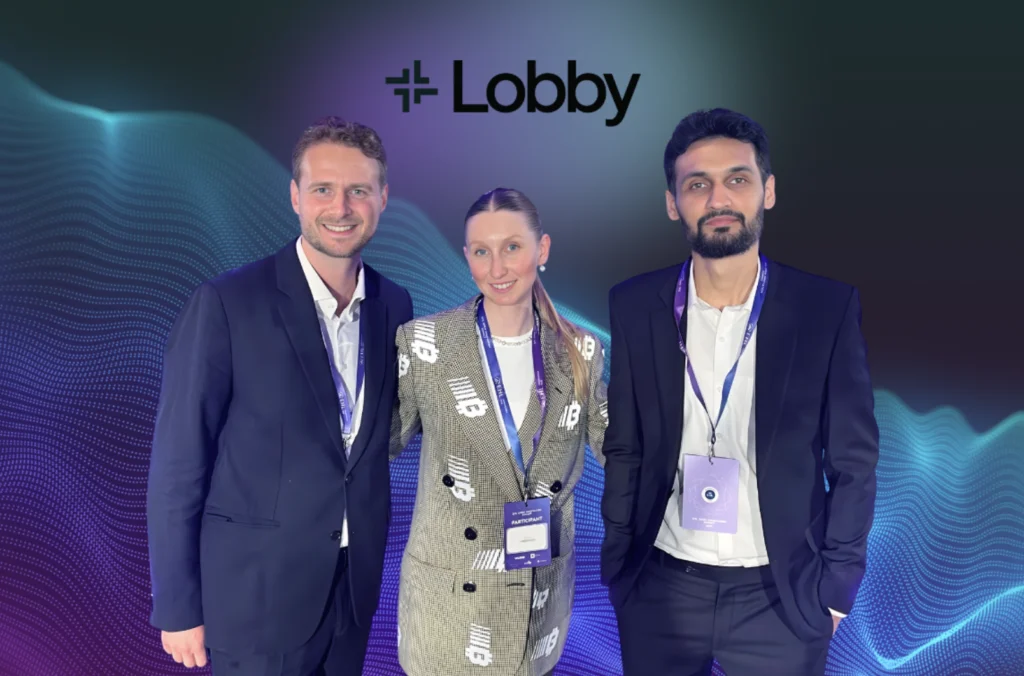
Lobby raises $2.2M for group AI group bookings
Swiss startup Lobby is the latest to raise some funds on the back of their AI innovations.
This time the focus is on group bookings.
It seems many group bookings in travel don’t really have a good system beyond just emailing back and forwards - hundreds of times to get all the details sorted.
Lobby changes that.
If you think someone (or everyone) you know or work with could grow from being more informed on the topic of ai + travel (or could use the training above) then please forward this email to them and they can click the button below:
Got a tip or seen a story I’ve missed? Let me know by simply replying to this newsletter.
AI lifts insurance conversions by 24%
There is a quite a bit of evidence floating around now that detailed answers from AI that can be interrogated on the spot to get all the info you need before making a decision are lifting conversions.
This makes logical sense. In the past people click out or started a new search because whatever static information they had received first up - didn’t satisfy them enough to click buy. Now they can continue to ask questions until satisfied without having to go somewhere else.
Brian Chesky has mentioned often that the traffic coming LLM’s is converting much higher than other channels. All the interrogation is done.
This week we heard that also is working well in the area of insurance (probably unsurprisingly).
“Early results show that customers engaging with the AI agent are more likely to complete purchases, with conversion rates rising by 24%. The system also improves operational efficiency by resolving a significant share of queries without human intervention, while maintaining oversight in line with evolving regulation.”
I wonder who and how transcripts of those conversations are being stored should there be an issue down the track? And does the customer have access to those - or is it just policy wording that any conflict might be judged against?
Slack Group!
The Slack group is full of the brightest minds in ai in travel.
This week there was talk about whether to be fearful or excited based on a post by someone who had replicated every startup in the current YC batch in just a number of hours……
Podcasts and Sponsors
Podcasts now on Spotify and Apple Podcasts:
New podcasts are now showing up on Spotify and Apple Podcasts for your easy listening pleasure!
This week I caught up with Jason Swick of SwixAI to chat through the specific AI needs of DMO’s and how software can be built to cater for people at all levels of their AI journey.
That’s it - you’ve made it to the end of this edition. Happy Easter to those who are celebrating it!
If you’re enjoying this newsletter and want to say thanks - you can always buy me a coffee.
I’ll be putting the result of the most clicked post in next week’s edition so you can see where others are focusing. If I’ve missed something, you’ve got a tip or any feedback at all - you can simply reply to this email and it will come straight to me. I’m doing this for You so please don’t be shy to tell me what you think
Artificial Intelligence (AI) Artificial intelligence leverages computers and machines to mimic the problem-solving and decision-making capabilities of the human mind. (source IBM)
Generative AI (GAI) is a type of AI powered by machine learning (ML) models that are trained on vast amounts of data and are used to produce new content, such as photos, text, code, images, and 3D renderings. (Source Amazon)
Large Language Model (LLM) is a specialized type of artificial intelligence (AI) that has been trained on vast amounts of text to understand existing content and generate original content.
ChatGPT - Open AI’s LLM; sometimes referred to by its series number GPT3; GPT3.5 or GPT4. These are used by Microsoft & Bing.
Gemini - Google’s suite of LLM.
If wanting to go even deeper into the AI lexicon - check out this handy guide created by Peter Syme for the tours & activity sector
